Imagine waking up tomorrow, opening Instagram, and discovering that your account has been suspended. No warning, no explanation, and no way to get in touch with an actual human being.
Your photos, your posts, the audience you’ve spent years building… suddenly gone.
It sounds dramatic, but the reality is that when you build your online presence on someone else’s platform, you’re playing by someone else’s rules. And those rules can change at any time.
We love social media. It’s an incredible way to connect with people, share your work, and grow your business. But we also believe something pretty strongly: Your social media accounts should support your online presence, not be your entire online presence.
You need a place for your content, your brand, and your business to call home. A place that isn’t dependent on the latest algorithm update or whatever happens to be trending this month.
The Problem With Building on Borrowed Land
Think about your favorite social media platform for a moment.
Maybe it’s Instagram, where you love connecting with your audience and sharing little glimpses of your day. Maybe it’s TikTok, where your videos have started gaining traction. Or maybe you’ve recently fallen in love with Substack and the idea of publishing everything in one convenient place.
All of these platforms have something in common: you own your content, but you don’t control what happens to it.
You can create original content, grow a following, and build a recognizable brand on social media alone. But the company behind the platform ultimately decides how it operates.
It can change its algorithm, introduce new fees, limit certain features, modify its policies, or suspend accounts. And you don’t get much of a say.
That’s not necessarily a reason to stop using these platforms. But it IS a reason to be thoughtful about how much of your business depends on them.
Instagram & the Never-Ending Algorithm Changes
Remember when Instagram was mostly a place to share food photos, weekend plans, and selfies?
Then came Stories. Then Reels. Then an ever-changing mix of recommendations, suggested content, and new features.
Instagram has evolved enormously, and some of those changes have created great opportunities for creators! But they’ve also made one thing very clear: having followers doesn’t guarantee those followers will see your content.
You might spend hours creating a thoughtful post, only for it to reach a tiny fraction of the audience you’ve worked so hard to build. And just when you think you’ve figured out what works, the algorithm changes again. 🫠
There’s nothing wrong with adapting your social media strategy. But wouldn’t it be nice if your entire business didn’t depend on keeping up?
TikTok & Platform Ownership
After years of political debate over whether the app should be allowed in the United States, it came incredibly close to being banned altogether. In January 2026, a last-minute deal allowed TikTok to continue operating in the US.
But think about what that period of uncertainty meant for creators who relied on TikTok for their income. Imagine spending years building an audience of hundreds of thousands of people, only to face the very real possibility of it all going away – literally overnight.
Even though TikTok ultimately avoided a ban, the whole situation showed just how quickly something outside of your control can put your entire business at risk.
Facebook & Account Suspension
If you’ve ever tried to resolve a problem with a Meta-Facebook-Instagram account, you probably know how frustrating it can be.
Accounts can be restricted or suspended, sometimes incorrectly. And getting a clear explanation or reaching someone who can help isn’t always easy.
For a casual user, losing access to an account is frustrating.
For a business owner who relies on that account to communicate with customers, receive inquiries, or generate sales? It can be absolutely devastating.
Imagine if your Facebook page were the only place customers could find your business. No independent website. No email list. No other way to reach your audience. That’s a lot of trust to place in a platform you don’t control.
What About Substack?
Substack deserves its own conversation because it’s become such a popular option for writers, bloggers, and creators. And we totally understand the appeal!
It makes publishing feel simple. You can write articles, send newsletters, build a subscriber base, and even offer paid subscriptions without worrying about much of the technical setup. For someone who primarily wants to write, that simplicity can be wonderful.
But there’s a big difference between owning your content and owning the platform where your content lives.
Substack allows writers to export their posts and subscriber lists, which is a valuable feature. Your writing doesn’t suddenly become Substack’s property just because you publish it there.
However, your publication still operates within Substack’s ecosystem. The company controls the platform’s features, publishing tools, pricing structure, and policies. If it changes how something works, you have to adapt.
And if you eventually want a more customized website with a shop, portfolio, services, special content layouts, or other functionality, you may find yourself working around the platform’s limitations.
Does That Mean You Shouldn’t Use Substack?
Not at all! Substack can be a great tool for building a newsletter and connecting with readers.
But it’s worth evaluating how much you rely on Substack. Is it the only place you share your writing, or is it just one part of your online presence, alongside a website you own? There’s a big difference!
You can absolutely use Substack alongside your website. Just make sure you’re thinking through where you want your content, brand, and audience relationships to live over the long term.
Your Website Gives Your Content a Permanent Home
Social media posts are fleeting. You publish something, people interact with it for a while, and eventually it gets buried beneath hundreds of newer posts.
A website works differently. An article you publish today can still be useful and discoverable years later. A recipe can continue attracting readers through Google, driving ad revenue. A travel guide can help someone planning a trip next summer. A home decor post can keep earning affiliate commissions for years. A portfolio can introduce potential clients to your work long after you’ve shared it on Instagram.
And instead of asking visitors to scroll through months of social media posts to find something, you can organize your content in a way that actually makes sense.
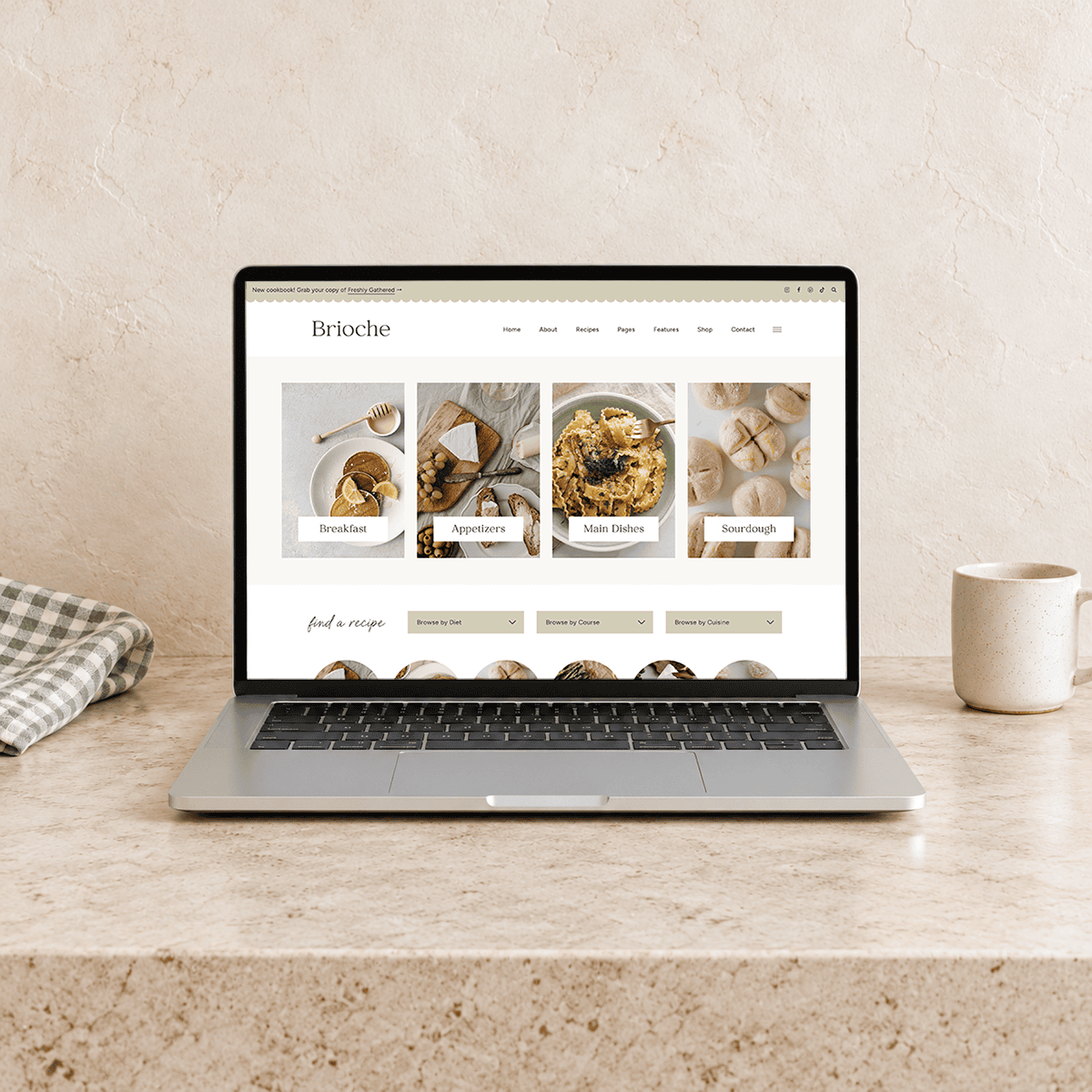
Your website can have:
- A homepage that introduces your brand and what you do
- Blog posts organized into helpful categories
- A portfolio showcasing your work
- A shop for products or digital downloads
- Services and information for potential clients
- An email signup so visitors can stay connected
- A contact page that makes reaching you easy
All in one place, under your own domain name, that you own.
Let social media be the introduction, not the entire story.
What Does It Really Mean to Own Your Website?
You might be thinking, But I already have a website! I use Squarespace or Shopify or Wix or Kajabi, or, or, or…
And that’s awesome! Having a dedicated website is already a great step beyond relying entirely on social media.
The Tradeoffs of Using a Proprietary Website Builder
Services like Squarespace, Shopify, Wix, Kajabi, and countless others are popular for good reason: they’re often an all-in-one solution. Some specialize in online stores, others in courses and memberships, and others make it easy to put together a pretty website without much technical knowledge.
For plenty of businesses, they’re a good choice to get up and running quickly!
The tradeoff is that you’re building within a proprietary system. Your website depends on the company continuing to provide the service, maintain the features you rely on, and operate under terms you’re comfortable with. And those things aren’t guaranteed to stay the same.
Subscription prices can increase (looking at you, Squarespace and Webflow). Features you depend on can be discontinued or moved to more expensive plans. A company can be acquired, change direction, or even shut down entirely.
Your account can also be suspended or terminated if the company determines that you’ve violated its policies. And while most reputable services have procedures for handling disputes, resolving an account issue isn’t always quick or straightforward.
You may also run into limitations as your business grows. If you need functionality that isn’t supported, you might have to pay for additional tools or add-ons, or accept that certain customizations aren’t possible with your platform.
And if you eventually decide to leave, you can’t necessarily take your entire website with you. You may be able to export your content, products, or customer data, but your design, integrations, and functionality will likely need to be rebuilt elsewhere.
In other words, you can own your content while still depending on a company for the website that delivers it.
None of this means proprietary website builders are bad choices. They’re a great fit for many businesses! But it’s worth understanding how much control you’re giving up, especially if your website plays an important role in your income or livelihood.
Why We Love Self-Hosted WordPress
This is one of the biggest reasons we’re such huge fans of WordPress. And to be clear, we’re talking about self-hosted WordPress, also known as WordPress.org!
Unlike a proprietary website builder, WordPress is completely open-source software. That means you’re not tied to one company for your website’s hosting, design, or functionality.
You choose your hosting provider, your theme, and which plugins and tools to use.
Freedom to Move Your Website
Let’s imagine a worst-case scenario. You’ve built a thriving WordPress website. You’ve published hundreds of blog posts, customized your design, and spent many years growing your business. Then one day, your hosting company announces they’re shutting down.
Scary? Absolutely. But with a self-hosted WordPress website and a recent backup, you can move your site to another hosting provider without having to start over.
Or maybe your hosting company gets acquired, and suddenly your monthly bill doubles. Perhaps the quality of their service starts declining, and you’re no longer happy with what you’re paying for.
You can simply pack up and take your website elsewhere.
Your content, images, theme, plugins, database, and entire website design can be transferred to a new server. Many hosting companies will even help migrate your website at no cost (they want your business 😉).
Your website isn’t permanently attached to the company hosting it, because you own your website free and clear. That’s a pretty big deal.
Of course, this freedom comes with some responsibility, like backing up your website and keeping WordPress updated. But having the flexibility to move your website to a different host whenever you want is a big perk of using open-source software like WordPress.
You Have More Freedom to Grow
Another thing we love about WordPress is how flexible it is.
Maybe you start with a basic lifestyle blog. A year later, you decide to offer a digital product. Then you add a newsletter, create a resource library, or start offering services.
With WordPress, you can expand your website as your needs change. You can install WooCommerce to create an online shop, add specialized functionality through plugins, or customize your design without being limited to one company’s built-in feature set.
That doesn’t mean every feature is free or that WordPress can do absolutely anything without additional work. But you have an enormous amount of freedom to decide how your website evolves. And for creators and small business owners, that flexibility is incredibly valuable.
Social Media Still Has an Important Place
Social media can be an INCREDIBLE tool for growing your business. It’s where people discover new creators, share recommendations, connect with communities, and find inspiration.
For many bloggers and business owners, social platforms are an important source of traffic, customers, and brand awareness. But we believe social media works best when it’s part of a bigger strategy.
Think of social media as the invitation and your website as the destination.
- A person discovers your recipe on Pinterest, then visits your food blog to make it
- Someone sees your work on Instagram, then visits your website to learn more about your services
- A potential customer watches your TikTok, then clicks through to your website to browse your products
You’re using social media to introduce people to what you do, while giving them a place to explore everything else you have to offer. And if one platform suddenly becomes less effective, your online presence doesn’t have to disappear with it!
Don’t Forget About Your Email List
While we’re talking about building something that lasts, let’s give email marketing a little love.
An email list is another valuable way to build a direct relationship with your audience.
Unlike social media followers, email subscribers have specifically chosen to hear from you. You can send updates, share content, announce products, and stay connected without depending on a social media feed to show your posts.
That doesn’t mean email platforms are completely independent either. Deliverability, provider policies, and privacy requirements still matter. But with a reputable email marketing service that allows you to export your subscriber list, you have the flexibility to move providers if needed.
Pop quiz: Can you export your Instagram followers and take them with you to another platform? NOPE.
Start Building Something That’s Yours
You can and should keep showing up on Instagram, Pinterest, and wherever else your audience spends time. Just give them somewhere to find you beyond those platforms. You also don’t need a huge, complicated website. Start with the essentials:
- Choose a domain name that represents your brand
- Set up a simple website with a homepage, an About page, and a way for people to contact you
- If you’re a blogger, start publishing content on your own site
- If you run a business, make sure visitors can learn about your services or products without needing a social media account
Then begin connecting the pieces:
- Add your website link to your social media bios
- Share your blog posts on social media
- Encourage visitors to join your email list
- Create pins on Pinterest that link back to your website
- Link to relevant blog posts in your Instagram Stories
- Mention your website in your YouTube videos and video descriptions
- Create free resources or downloads that bring people to your website
Over time, you’ll be building something that isn’t tied to the success of one particular social platform.
Final Thoughts
Social media platforms will come and go. Algorithms will change. New apps will become popular, and old favorites will lose their appeal. That’s simply part of being online.
But your entire business shouldn’t have to change direction every time a platform does. We believe every blogger, creator, and small business owner deserves a home on the internet that they have real, meaningful control over. Somewhere their content can live, their brand can grow, and their audience can always find them.
Use Instagram. Experiment with TikTok. Publish a newsletter on Substack if you love it. There are SO many wonderful ways to connect with people online! Just don’t forget to build something that’s yours, too.